
Your Retaining Wall Is Holding Back More Than Dirt in Fond du Lac, WI
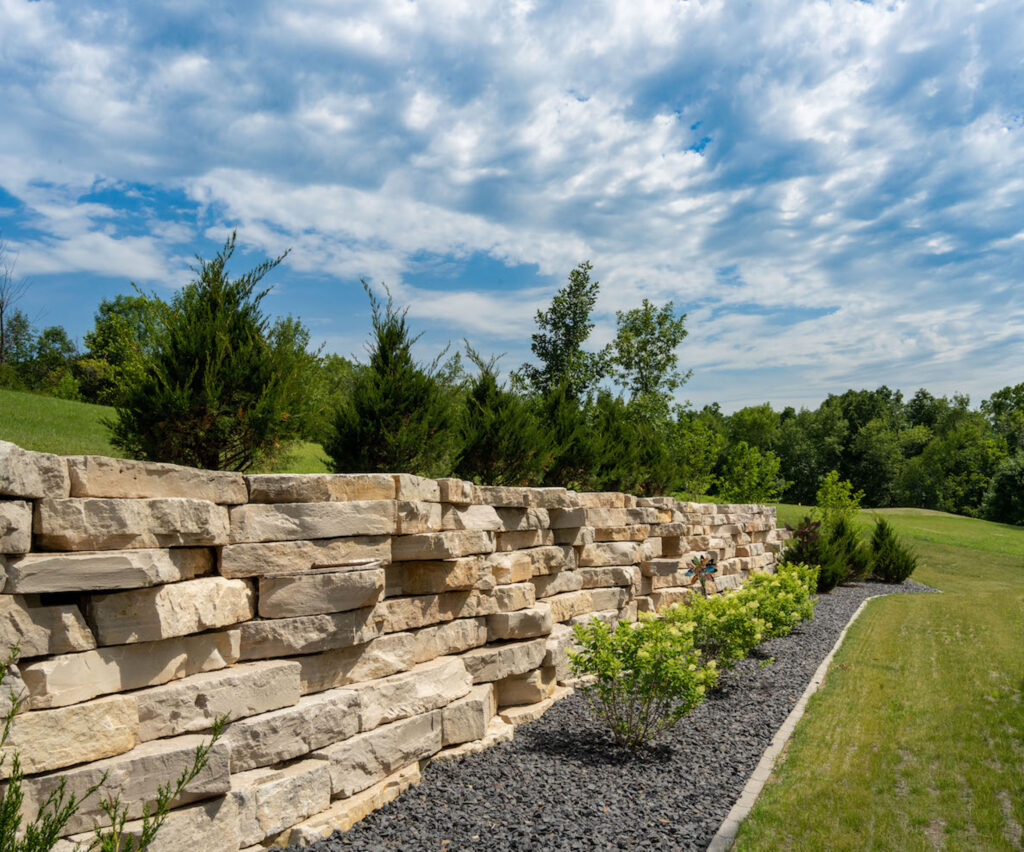
Most people picture a retaining wall doing exactly one job: keeping soil from sliding down a slope. That picture is not wrong, but it is incomplete. A retaining wall built for Fond du Lac, WI, has to manage water, withstand a freeze-thaw cycle that runs for months, and absorb pressure that builds up behind it every time the ground saturates and refreezes.
The dirt is the easy part. Everything else is what determines whether the wall lasts.
Stuart’s Landscaping & Garden Center has spent nearly 40 years building retaining walls and stonework across Fond du Lac, Green Lake, and the greater Fox Valley region, working directly with the soil conditions, drainage patterns, and seasonal extremes specific to this part of Wisconsin.
With over 100 employees during peak season and more than 2,000 completed projects a year, the team brings hands-on experience with exactly the kind of structural demands this climate places on every wall built into the ground.
Related: What a Retaining Wall in Fond du Lac, WI, Can Do for Your Property
What Is Actually Pushing Against a Retaining Wall?
Soil alone is relatively predictable. Add water, and the equation changes completely. Saturated soil is heavier, and it exerts far more lateral pressure against a wall than dry soil ever would.
In Wisconsin, that saturation happens repeatedly through fall rains, spring snowmelt, and the freeze-thaw transitions that occur dozens of times across a typical winter.
When water trapped behind a wall freezes, it expands. That expansion pushes outward with significant force, and it repeats every time temperatures swing above and below freezing.
A wall without proper drainage behind it absorbs that hydrostatic pressure directly, and over a few seasons, the cumulative effect shows up as bowing, cracking, or sections that begin to separate.
Why Drainage Matters More Than the Stone You See
The visible face of a retaining wall gets all the attention during the design conversation, but the drainage system behind it is what determines the wall’s lifespan.
Gravel backfill, perforated drainage pipe, and proper grading all work together to give water somewhere to go besides directly against the wall structure. Without that system in place, every freeze-thaw cycle adds stress that the wall was never built to handle.
This is the difference between a wall that performs for decades and one that needs rebuilding within a handful of years. The materials on the surface might look identical. What happens underneath them does not.
Related: Modern Materials & Finishes Homeowners Love for Retaining Wall Installations in Waupun, WI
What Does a Wall Built for This Climate Actually Need?
A retaining wall designed for Fond du Lac winters starts below grade, with a properly compacted base that can handle ground movement without shifting.
From there, drainage gets built in as a structural requirement, not an afterthought. The wall itself, whether natural stone, segmental block, or another material, needs to handle the expansion and contraction this region delivers without losing its structural integrity.
Stuart’s Landscaping & Garden Center has built retaining walls across Fond du Lac and the greater Fox Valley region for nearly 40 years, working with exactly these seasonal demands on every project.
What Fond du Lac, WI, Homeowners Can Expect From the Process
A retaining wall that holds up here is one built with the full understanding that dirt is the smallest part of what it has to manage. Water, freeze-thaw cycles, and drainage all factor into a design that performs through Wisconsin winters rather than fighting them.
Contact Stuart’s Landscaping & Garden Center today to start a retaining wall project built for everything Fond du Lac actually throws at it.
Related: 5 Backyard Upgrades That Pair Perfectly With Outdoor Lighting and a Retaining Wall in Ripon, WI