
Pergola Construction in Fond du Lac, WI: Proportion First, Then the Planting
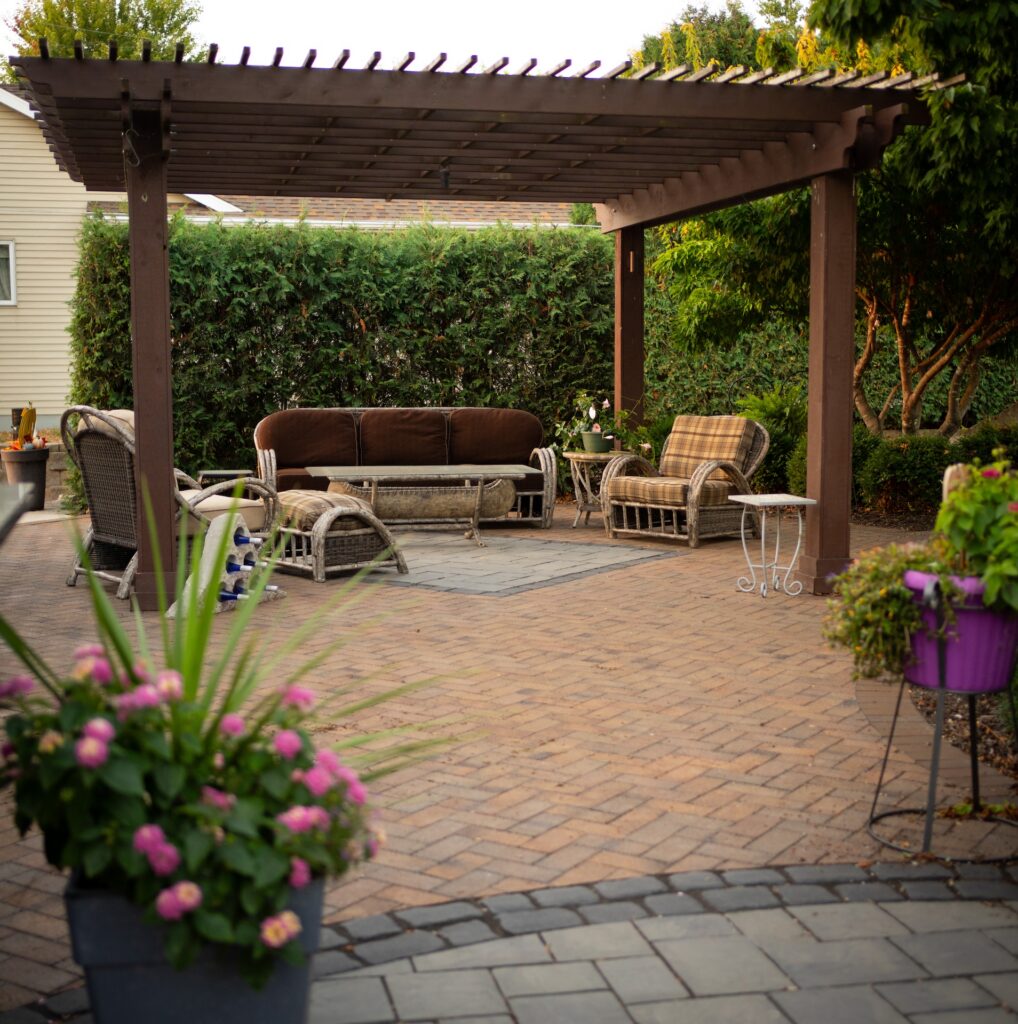
Good pergola construction in Fond du Lac, WI is mostly an argument about proportion. A structure half a size too small makes the patio under it feel crowded, and one half a size too large reads like scaffolding over the seating.
Stuart Muche founded Stuart’s Landscaping in the spring of 1986, and four decades on we still grow a good share of what goes in around a new structure on our own tree farm. That matters more than it sounds.
A pergola is a frame, and what it frames is the planting, the paving and the view past it. Designing the structure without deciding what will sit beside it tends to produce something correct and oddly bare.
Related: Discover the Beauty of Pergolas in Your Backyard
How Is a Pergola Sized Against the Space It Covers?
A pergola is sized by what happens underneath it rather than by the patio outline. Our designers start with the furniture: a six-seat dining table needs clear circulation on all sides, and lounge seating needs less footprint but more height to feel right.
The structure is then sized to cover that furniture group with an overhang. That usually makes it smaller than the patio and larger than the furniture, which is the proportion that reads as deliberate.
How Far Apart Can Pergola Posts Sit Before the Beams Sag?
Pergola posts can sit further apart than most people expect, and the limit is beam depth rather than post count. A deeper beam carries a longer clear span, so widening a bay is a question of accepting a heavier-looking header rather than adding another post.
Post placement also has to miss what is already on the patio. A doorway, a grill position or a step often settles the bay width before the structural math does.
What Does an Open-Top Pergola Do to the Light Underneath?
An open-top pergola breaks the light rather than removing it, and the quality of that depends on rafter depth, spacing and direction. Deeper rafters set closer together give real relief at midday while still reading as open.
The direction of the run decides which hours get the benefit, which is why our designers check the orientation of the patio before setting the rafter layout. On a west-facing patio, that choice decides whether late afternoon is the best part of the day or the part everyone moves indoors.
Related: 7 Landscape Design and Pergola Ideas Perfect for Town of Empire, WI, Backyards
How Do Climbing Plants Work on a Pergola in Wisconsin?
Climbing plants work on a pergola here with the right species and some patience. Hardy climbers take a few seasons to cover a structure in this climate, and the frame has to be built with that load and that maintenance in mind.
The payoff is a structure that shades more each year. The caution is that a vigorous vine on an undersized frame becomes a pruning job nobody enjoys.
How Does the Planting Around a Pergola Get Chosen?
Planting around a pergola gets chosen by what the structure is being asked to do. A structure meant to feel enclosed gets taller material at the back and sides, and the planting carries the sense of walls that the frame only suggests.
One meant to hold a view keeps the sightline clear and uses low planting to define the edge instead. Our garden centers and tree farm give the design team real stock to specify against, so the sizes quoted are the sizes that arrive.
Schedule Pergola Construction in Fond du Lac, WI Before the Build Season
Our work on pergolas and pavilions takes in the proportion, the light and the planting as one design rather than a structure with landscaping added afterward.
Contact Stuart’s Landscaping to start pergola construction for a Fond du Lac property while next season’s calendar is still open.
In Summary
What does a pergola offer in Wisconsin without a solid roof?
An open pergola earns its place in Wisconsin’s shoulder seasons and on bright summer afternoons. Adding a solid roof turns it into a pavilion, with different footings and a different permit conversation, so households wanting shelter they can count on during rain are usually describing a pavilion and should settle that before design.
What grows well on a pergola around Fond du Lac?
Hardy climbers that tolerate zone 5 and a windy, open position grow well on a pergola around Fond du Lac. Climbing hydrangea is slow and worth the wait, and several clematis groups perform well with their roots shaded. Stuart’s garden center staff match the vine to the aspect and to how much the household wants to prune.
How far ahead should pergola construction be scheduled?
Pergola construction should be scheduled far enough ahead that the footings can be dug in open ground. Structures designed in autumn and winter get the better part of the following build season to choose from, and the planting around them can be grown on and timed to go in once construction is finished.
Related: Transforming Outdoor Living with Landscape Design and Pergolas in the Town of Empire, WI