
Lawn Care That Accounts for What Wisconsin Puts Your Turf Through in Fond du Lac
A lawn in central Wisconsin does not get to coast. It gets frozen for five months. It gets saturated during snowmelt. It gets baked during July. It gets compacted by foot traffic, stressed by humidity, and tested by every transition between seasons. And then it is expected to look green, thick, and healthy from May through October.
That expectation is reasonable. But meeting it requires more than mowing and hoping. It requires a lawn care program designed for what cool-season turf actually needs in this climate, delivered on a schedule that matches the biology of the grass.
Related: Understanding Professional Lawn Care in Waupun, WI
What a Complete Program Looks Like
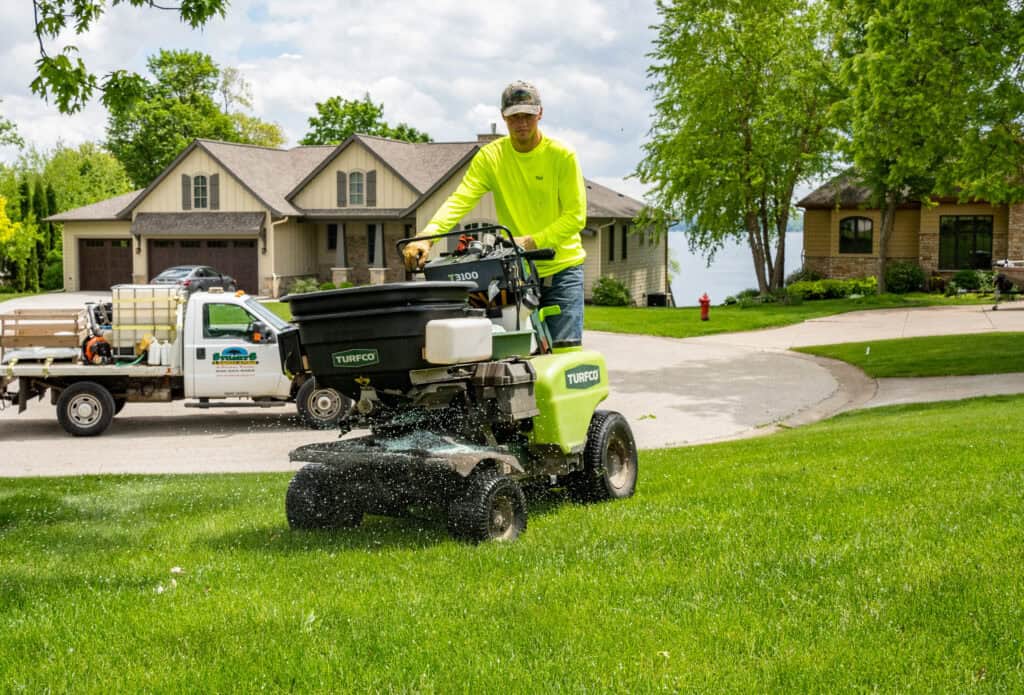
Lawn care is not a single service. It is a system of services that work together across the growing season. Each one addresses a different aspect of turf health, and skipping any one of them creates a gap that shows up in the lawn’s performance.
A program built for properties in Fond du Lac, Green Lake, Oshkosh, and the Fox Valley area includes:
- Mowing at the right height and frequency. Cool-season grasses perform best at 3 to 3.5 inches. Mowing too short exposes the soil to sunlight, increases moisture loss, and weakens the root system. Mowing on a consistent schedule keeps the turf even and prevents the stress of removing too much blade at once.
- Fertilization timed to the season. A light spring application supports green up. A fall application builds root density for winter survival and a stronger spring recovery. Summer feeding is minimal or eliminated for cool-season turf in this region because the grass naturally slows its growth during heat.
- Aeration in the fall to relieve soil compaction. The clay and loam soils common across central Wisconsin compact under foot traffic, mowing equipment, and weather. Core aeration creates channels for water, oxygen, and nutrients to reach the root zone where they are needed.
- Weed management that starts with prevention. A properly timed pre-emergent in early spring stops crabgrass and other annual weeds before they germinate. Broadleaf weed control addresses dandelions, clover, and other persistent species during the active growing season.
- Irrigation maintenance to ensure the lawn receives consistent moisture without overwatering. Adjusting sprinkler heads, checking coverage patterns, and calibrating run times for the season prevents both drought stress and the fungal conditions that develop when turf stays wet for too long.
When these services are coordinated into a single program, the lawn improves year over year. The turf thickens. The weeds thin. The color holds deeper into fall. And the amount of intervention required to maintain the lawn decreases as the soil health and turf density build.
Related: How Weather Affects Your West Bend, WI, Lawn Care Strategy
Why the Lawn Is Worth the Investment
The lawn is the largest single surface on most residential properties. It is the background to every garden bed, every walkway, and every outdoor gathering. It is the surface the kids play on and the view from every window that faces the yard.
For homeowners across Fond du Lac, Green Lake, Oshkosh, and the communities throughout central Wisconsin, a lawn that is thick, healthy, and consistent from spring through fall is not an accident. It is the result of a program that understands what this climate demands and delivers the right service at the right time.
If your lawn has been underperforming, the answer is usually not more of what you have been doing. It is a program that covers every layer.
Related: Sophisticated Landscape Care: The Art of Plantings & Lawn Care for Black Wolf, WI, Estates